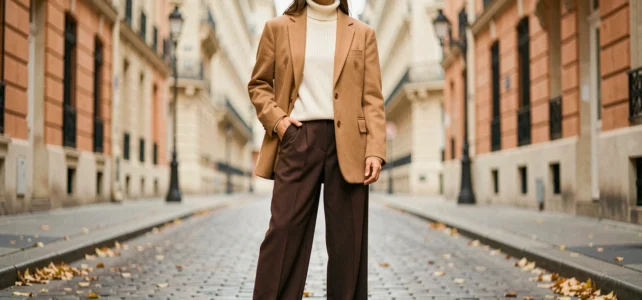
The autumn-winter 2026-2027 fashion trends outline two opposing directions: on one side, saturated colors and generous volumes inherited from dopamine dressing; on the other, a soothing approach called cortisol dressing, based on soft hues and enveloping materials. Measuring what separates these two poles helps to understand which clothing choices truly build a unique style this season.
Cortisol dressing versus dopamine dressing: two opposing style logics
The term dopamine dressing has referred for several seasons to the use of bright colors and eye-catching pieces to boost mood. According to El Mundo (August 25, 2026), a counter-trend has emerged under the name of cortisol dressing: it favors soft colors, loose silhouettes, and comfortable materials, with an explicit promise of stress reduction.
| Criterion | Dopamine dressing | Cortisol dressing |
|---|---|---|
| Palette | Bright, saturated colors | Powdery, neutral, pastel tones |
| Silhouette | Structured, assertive | Loose, fluid, enveloping |
| Materials | Vinyl, sequins, shiny textures | Cashmere, soft knit, brushed cotton |
| Intention | Stimulate, attract the eye | Soothing, create emotional comfort |
| Key pieces | Colorblock dress, short colorful jacket | Oversized sweater, high-waisted wide pants |
The autumn-winter 2026-2027 fashion shows validated both directions simultaneously. The collections oscillate between chromatic explosions and monochrome wardrobes in neutral tones. The common point remains a marked preference for generous volumes.
An regularly updated overview of seasonal pieces and looks is available at https://www.concentre-de-mode.com/, which helps to identify where the collections stand in relation to these two poles.
Double wardrobe: alternating quiet luxury and statement pieces
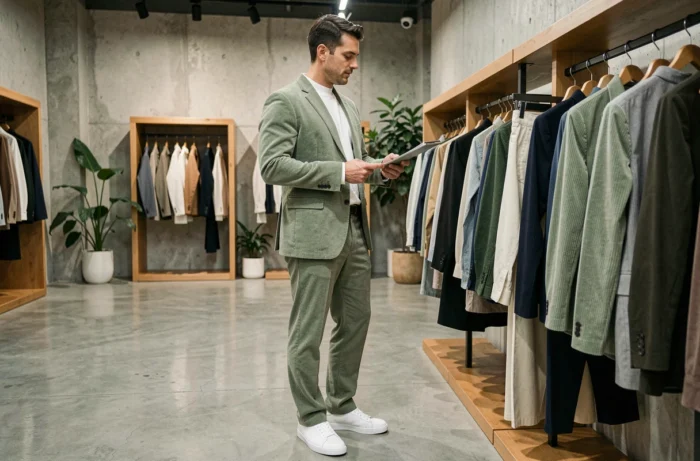
The notion of quiet luxury, omnipresent since 2023, has evolved in 2026. Several fashion analyses now describe a logic of double wardrobe: a foundation of understated and well-tailored pieces, complemented by more demonstrative elements reserved for certain occasions.
This approach goes beyond the simple classification of “basics + statement pieces.” It involves considering each purchase according to its emotional function. A well-chosen barrel jean or beige pants belong to the foundation; a floral print dress or a short colorful jacket serves as a statement piece.
Building the foundation without falling into the generic
The risk of quiet luxury taken to the extreme is uniformity. To avoid this pitfall, the choice of materials makes all the difference. An oversized sweater in thick ribbed knit does not produce the same effect as a model in fine jersey, even in the same neutral shade.
- Favor materials with texture (twisted knit, corduroy, boiled wool) that create volume without strong color
- Vary textures within the same outfit: pairing a matte surface with a slightly shiny surface breaks the monotony
- Choose slightly offbeat cuts compared to standard basics (drop shoulders, asymmetrical hems) to maintain a personal signature
Color trends autumn-winter 2026: beyond black and beige
The palettes observed on the autumn-winter 2026-2027 runways confirm a return of bright colors, but in a different register from previous seasons. The most recurring shades are no longer bright neons: they lean towards deep and saturated tones (burgundy, forest green, midnight blue) that integrate more easily into a daily wardrobe.
On the other hand, the cortisol dressing trend simultaneously promotes low-contrast colors: greige, powder pink, lavender blue. These two palettes coexist without contradicting each other, as they respond to different needs.
Combining both registers in a single look
Wearing a saturated piece (a burgundy dress, a fir green sweater) with accessories in neutral and soft tones creates a visual balance that neither a total colorful look nor a total neutral look achieves alone. The contrast of saturation replaces the contrast of color as a compositional tool.
Second hand and resale: a style parameter that has become structural
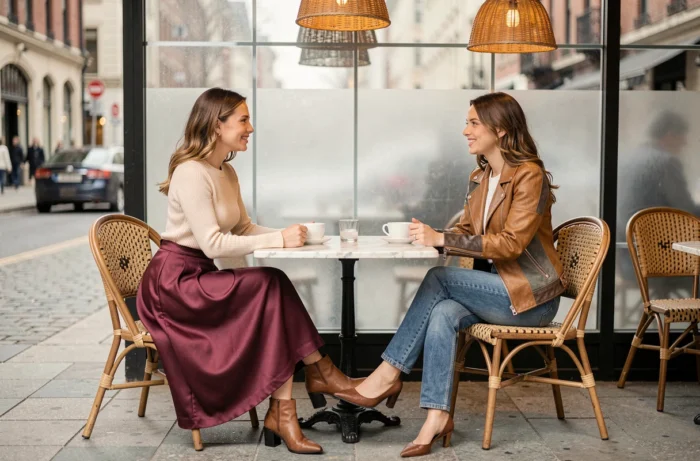
The fashion resale market has reached $31.7 billion according to Milano Finanza, driven by the growth of online shopping. This figure changes the way a unique style is built: the available pieces are no longer limited to current collections.
Buying a jacket from a previous season or a vintage dress helps avoid the main risk of current fashion, which is wearing exactly the same pieces as everyone else at the same time. Second hand becomes a concrete lever of originality, not just an ecological choice.
- The oversized pieces from the 2024-2025 collections, now available in resale, fit perfectly into the loose silhouettes of autumn-winter 2026
- The floral prints from past seasons remain compatible with the flower power trend observed on recent runways
- Noble materials (cashmere, full-grain leather) retain their value and appearance better in the resale market
The uniqueness of a style this season does not depend on the number of trends adopted but on the coherence between the chosen pieces. Mixing resale elements with targeted new purchases produces combinations that looks from a single collection do not allow. The true gauge remains the ability to articulate emotional comfort and visual assertion, two directions that autumn-winter 2026 finally makes compatible.