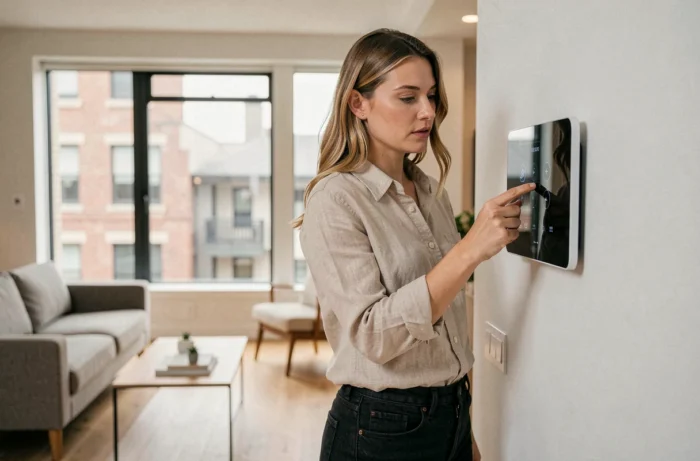
The connected home is based on a simple principle: domestic devices (thermostat, lighting, lock, shutters) communicate with each other and with a central system via network protocols. This interconnection allows for remote control, automation of scenarios, and data collection on the energy consumption of the home. Recent developments are no longer just about adding new devices, but about how these devices coexist, protect themselves, and survive abandonment by their manufacturer.
Lifecycle of Connected Devices: What Happens When the Manufacturer Stops Updates
A connected thermostat or lock depends on a remote server to function. When the manufacturer stops maintaining this server, the device loses all or part of its smart functions. The issue is not limited to comfort: a camera or lock without security patches becomes a gateway for digital intrusions.
Unlike a mechanical switch, which has a lifespan measured in decades, a connected device often has a software lifespan that is much shorter than its hardware lifespan. This discrepancy creates a blind spot in building management. A homeowner who has invested in a complete home automation system may find themselves forced to replace equipment that is still physically functional due to a lack of software support.
Several avenues are emerging to limit this dependency. Open protocols like Matter, which allow devices from different brands to communicate without going through a proprietary cloud, reduce the risk of obsolescence tied to a single manufacturer. Some open-source communities also maintain alternative firmware to extend the life of abandoned devices. To keep up with the latest news from Mon Habitat on these topics, regular monitoring remains the best reflex in a rapidly evolving sector.
Cyber Resilience Act: The New European Regulation for the Connected Home
The Cyber Resilience Act (CRA) adopted by the European Union changes the rules of the game for all manufacturers of connected devices sold on the European market. This regulation imposes cybersecurity oversight throughout the product lifecycle, not just at the time of market launch.
Concrete Obligations for Manufacturers
The logic of the CRA is based on security by default from the design stage. Manufacturers will need to limit vulnerable configurations, integrate structured vulnerability management, and provide security updates for a clearly announced support period. They will also need to quickly report actively exploited vulnerabilities.
Technical documentation becomes a mandatory deliverable. Each product must be accompanied by detailed information about its security architecture, update mechanisms, and communication interfaces.
Enhanced Classification for Home Security Equipment
Connected locks, surveillance cameras, and alarm systems are classified as “important” products under the CRA. This classification leads to stricter compliance requirements than for ordinary connected devices, with specific security assessments.
- Connected locks and alarms will need to undergo enhanced compliance audits before marketing
- Manufacturers will need to maintain a vulnerability reporting channel accessible to users and security researchers
- The minimum software support period must be communicated at the time of purchase, allowing consumers to compare products based on this criterion
The CRA transforms the support duration into a measurable commercial argument, where it previously remained a vague promise. For the connected home market, this means that brands investing in long-term support will gain a real competitive advantage.
Energy Management and Matter Protocol: Towards Real-Time Control
The boundary between home automation and energy management is blurring. Until recently, controlling a connected radiator meant programming fixed time slots or manually adjusting the temperature remotely. Developments in the Matter standard open a different path.
New types of energy management data integrated into the protocol allow devices to react to electricity rates in real-time. A compatible water heater or heat pump can adjust its operation to the least expensive hours without human intervention, directly utilizing the pricing signals transmitted by the grid.
This capability goes beyond mere comfort. It opens up the possibility for domestic devices to participate in demand response programs at the grid level. A home equipped with domestic batteries, solar panels, and Matter-compatible devices can theoretically modulate its consumption and production based on the needs of the local grid.
Interoperability: The Purchase Criterion to Check First
Compatibility with Matter does not guarantee seamless integration on its own. Before investing in a connected device related to energy management, several points deserve verification:
- The version of the Matter protocol supported (advanced energy functions are not present in all versions)
- The possibility of local operation, without reliance on a cloud server, to maintain control even in case of internet failure
- Compatibility with other already installed devices, particularly the heating system and smart meter
- The software support duration announced by the manufacturer, which conditions the longevity of the investment
Home Cybersecurity: Reflexes to Adopt from Installation
The proliferation of connected devices in a home mechanically increases the attack surface. Each device connected to the home Wi-Fi network represents a potential entry point. Consumer-grade routers, rarely updated by their owners, exacerbate the situation.
Segmenting the home network is an effective first measure. Placing connected devices on a separate Wi-Fi network (a VLAN or simply the “guest” network of the router) prevents a compromised device from accessing the household’s computers and phones. This separation requires no additional hardware on most recent routers.
The choice of passwords remains a weak link. Many connected devices come with default credentials that users never change. With the CRA, default configurations must be secured from the factory, but already installed devices will remain vulnerable if their owners do not take the initiative to reconfigure them.
The connected home is entering a phase where regulation is catching up with usage. The Cyber Resilience Act gives European consumers a concrete lever to demand transparency and software durability. The question of longevity, long relegated to the background behind features, is becoming a selection criterion on par with price or compatibility.