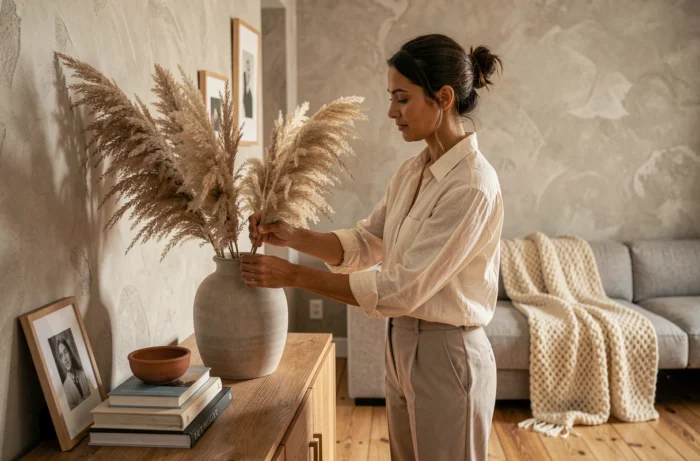
A warm interior is about more than choosing a sofa or wall color. The feeling of comfort in a home combines visual elements (colors, materials), tactile ones (textiles, finishes) and thermal factors (insulation, ventilation). Making a space your own means understanding how these elements interact, even when you can’t drill into a wall or replace the flooring.
Decorating a rental: personalize your space without permanent renovations
Most decorating advice assumes the reader owns their home. For renters, the restrictions change everything: you can’t paint a load-bearing wall terracotta or replace the parquet flooring without the landlord’s permission.
Reversible solutions are available and can have a similar impact. Removable, repositionable wallpaper can completely transform the atmosphere of a room without leaving a trace. Click-together vinyl tiles can be laid over existing flooring and removed when you move out. Tension rods let you hang heavy curtains without drilling.
- Heavy textiles (linen curtains, wool throws, velvet cushions) absorb sound and add visual warmth to a room with the white walls required by the lease
- Floor or clip-on lamps can replace an unflattering ceiling light without any electrical work
- Freestanding or floor-to-ceiling tension shelving adds storage and personality without putting holes in the wall
Secondhand finds are a practical option for smaller budgets. Picking up an armchair at a flea market or salvaging a solid wood table gives a space a unique character, whereas standardized new furniture often feels impersonal. For ideas on how to arrange a space to suit any layout, visit https://homedream.fr.
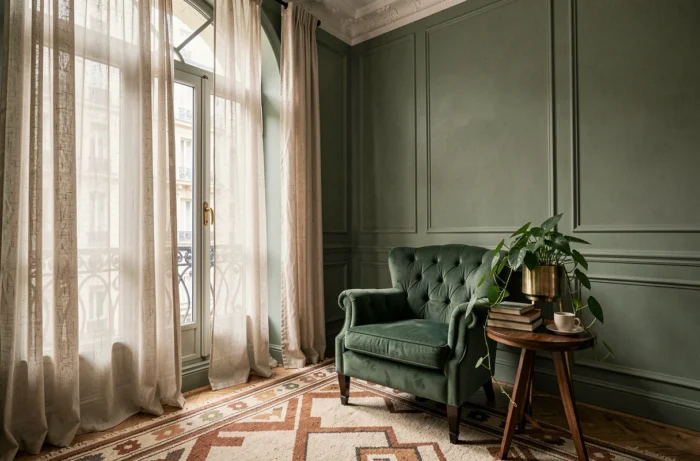
Color palettes and natural materials for a warm living room
Color temperature refers to the warm or cool feeling a shade creates. Warm tones (beige, ochre, terracotta, brown) absorb light and make walls appear closer. Cool tones (bluish gray, pure white) make a space feel larger but can create a sense of distance.
To create a warm interior, start with a warm neutral base (walls, flooring) and add depth through texture. Wood, linen, bouclé wool and handmade ceramics each bring a different texture, keeping the space from feeling monotonous.
A common pitfall is using too many bright colors in an attempt to liven up a room. Once you go beyond three main shades in a single space, the eye no longer knows where to settle. Three colors per room are enough to create a cohesive atmosphere; play with shades and textures rather than adding more colors.
Materials that change how a space feels
Corduroy upholstery on a sofa catches the light differently depending on the angle, bringing movement to a living room. Unvarnished solid wood on a coffee table or shelving adds visual irregularity that lacquered furniture can’t replicate. Woven fibers (rattan, jute, wicker) work on both floors and walls, and echo the organic materials that are a defining feature of decor this season.
Lighting and thermal comfort: what makes a space truly inviting
Lighting is one of the most overlooked tools in interior design. A single ceiling light casts flat light that flattens the room. Using multiple light sources at different heights (a table lamp, reading lamp, string lights, candles) creates areas of light and shadow that give the room structure.
The color temperature of the lighting matters as much as its brightness. Bulbs around 2,700 kelvins produce a golden light similar to candlelight. Above 4,000 kelvins, the light becomes cool and white—suitable for a work surface, but not a living room.
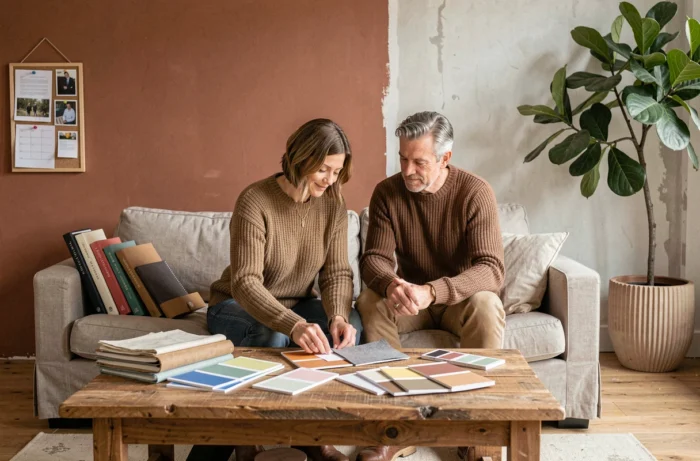
Thermal comfort: the overlooked aspect of decor
A beautifully decorated but poorly insulated home is still uncomfortable. Thermal comfort is an essential part of what makes a space feel warm in the literal sense. Thermal-lined curtains, a thick rug over cold tile or a draft stopper can reduce drafts without requiring any renovation work.
For homeowners considering a more extensive renovation, energy regulations are imposing increasingly strict requirements. Since January 1, 2025, homes rated G on the DPE are no longer considered decent for affected new leases, renewals or extensions. Coordinating a decorating project with insulation work avoids renovating the same room twice and helps optimize the overall budget.
Furniture and personal touches: express your style without clutter
Personalizing an interior is less about accumulating things and more about choosing them carefully. Three thoughtfully selected items (a vintage lamp, a framed photo, a handmade vase) make more of an impression than ten decorative accessories bought as a set.
Reusing furniture goes beyond aesthetics and is part of a broader approach to more sustainable living. Salvaging a chest of drawers, reupholstering an armchair or turning a wooden crate into a bedside table gives each piece a story that new furniture can’t tell.
- Choose one or two statement pieces (an antique sideboard, a solid wood table) rather than furnishing the entire room in the same style
- Add houseplants to bring the room to life and improve its perceived air quality
- Leave some surfaces clear: a half-filled shelf feels more spacious than one crammed with objects
It’s also worth planning for how your everyday needs may change. Modular furniture, an extendable table or adaptable storage can help your decor evolve without replacing everything when your household’s needs change.
A warm, personal interior is built up in layers, not created in a single shopping trip. Starting with lighting and textiles, then adjusting the colors and furniture over time, is the most reliable way to create a space that continues to feel like home.