For several years, structured associations have been conducting field investigations in France, specialized fairs have been touring the country, and podcasts dedicated to unexplained phenomena have attracted a loyal audience. This overview of paranormal news in France helps to understand what is actually happening, far from clichés.
Paranormal Investigator Associations in France: Local Structuring
Have you ever heard of “ghost hunters”? In France, this activity takes a much more organized form than one might imagine. Groups of amateur investigators are forming registered associations, with a specific social purpose.
In the North, for example, the association Chasseurs du Paranormal France, created in 2020, has a clear objective: to help people confronted with so-called paranormal phenomena, or to demystify these phenomena, all free of charge. This type of structure stands out from simple YouTube channels due to its legal framework and commitment to being free of charge.
Calls to recruit experienced investigators are circulating in certain departments, notably in the North and Pas-de-Calais. These recruitments target profiles capable of conducting “serious investigations,” equipped with suitable audio and video equipment. We are witnessing a gradual professionalization of practices that have long remained informal. To keep up with the latest from Paranormal News, this associative movement represents one of the most followed angles by the Francophone community.
This local structuring changes the game. Witnesses of unexplained phenomena now have identifiable interlocutors, which contrasts with the time when reporting a strange experience risked mockery.

Itinerant Paranormal Fairs: A Touring Format Across France
Paranormal fairs are no longer limited to a city or region. A new format is emerging: itinerant tours organized like real shows, with programming, dates announced in advance, and professional communication.
The Mystère et Fantastique fair in Auchy-les-Mines, in Pas-de-Calais, illustrates this trend. Co-organized by Philippe Crétal, it brings together investigators, paranormal historians, and enthusiasts around conferences, workshops, and demonstrations. This fair was even the subject of a feature on France Bleu, with the participation of historian Jocelyn Keller.
The tour model brings these events closer to traditional convention and live performance circuits. While a fixed fair attracts a local audience, the itinerant version allows for reaching medium-sized towns that are rarely covered by this type of offering.
What Distinguishes These Fairs from Classic Conventions
- Visitors can participate in immersive experiences on-site, not just attend conferences
- Field investigators present their methods and equipment (audio sensors, thermal cameras)
- Organizers adopt a dual stance: welcoming both believers and skeptics, without taking sides
Podcasts and Paranormal Stories: Why France is a Fertile Ground
The podcast “Paranormal – Histoires Vraies,” produced by Minuit, releases a new episode every Monday. Its catalog covers a variety of topics such as the Beast of Gévaudan, the Bermuda Triangle, or unexplained disappearances. This daily or weekly format builds a loyal audience that consumes these stories like series.
French regional folklore directly feeds these contents. Each region has its legends, its reputed haunted places, and its orally transmitted stories. The Crest Tower, in Drôme, an old prison, is one of those sites that accumulate unexplained stories and attract both the curious and investigators.
Audio is not the only medium. On social media, creators specializing in urbex (urban exploration) film their visits to abandoned castles or disused buildings, highlighting the strange atmosphere of these places. These videos accumulate hundreds of thousands of views and help renew interest in the paranormal among a younger audience.
Which Formats Work Best
Long, documented stories prevail over short sensationalist formats. A podcast episode that recounts the complete history of a place, with historical sources, captures more attention than a compilation of “jump scares.”
Infrasound and the Scientific Approach to Paranormal Phenomena
Why do some people feel intense discomfort in places reputed to be haunted? One often overlooked lead in mainstream media concerns infrasound, those very low-frequency sounds imperceptible to the human ear.
Infrasound could contribute to certain so-called paranormal experiences. This hypothesis is based on the fact that these vibrations sometimes provoke physical sensations (nausea, anxiety, feeling of presence) without the person identifying their source.
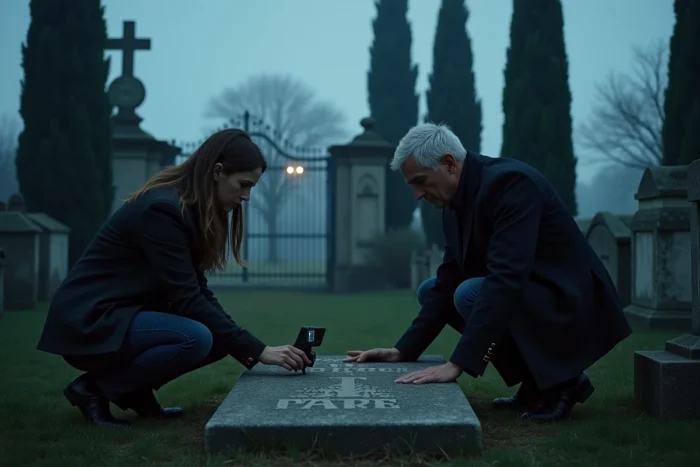
This approach does not claim to explain everything. It illustrates an underlying trend: the coexistence between field investigators and scientific approaches. Some associations are now integrating measurement protocols (frequency sensors, temperature readings) into their investigations, distancing themselves from mere subjective testimony.
- Infrasound can be generated by ventilation systems, old pipes, or the wind in certain architectural configurations
- Their detection requires specific equipment that some investigative groups are beginning to use
- This lead does not invalidate testimonies; it proposes an additional filter before concluding the unexplained
The paranormal in France is transforming. Between registered associations, touring fairs, documented podcasts, and scientific leads like infrasound, the subject is gaining depth. Stories and investigations are professionalizing without losing their element of mystery.