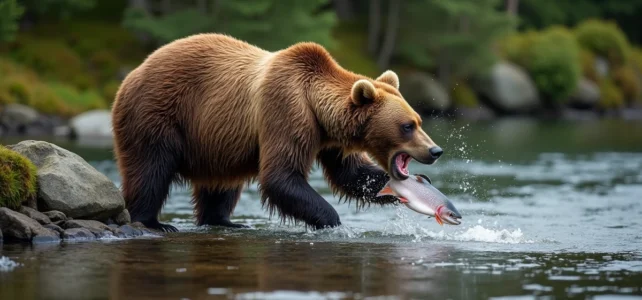
The term omnivore, from the Latin omni (all) and vorare (to devour), refers to a physiological capability rather than a fixed diet. An omnivorous animal has a digestive system capable of absorbing food from both plant and animal origins. What makes this category more complex than it seems is that the actual diet practiced by an omnivorous species varies considerably depending on its environment, the season, and the pressure exerted by other species.
Omnivore: a digestive capacity, not a fixed menu
The distinction between biological potential and actual diet is a point that classical classifications tend to overlook. A brown bear, classified among omnivores, derives the majority of its calories from plants (berries, roots, grasses) for a large part of the year. Its consumption of salmon, spectacular during spawning season, is concentrated over just a few weeks. Its digestive system allows for both, but its actual diet leans significantly depending on geography and resource availability.
This flexibility is also found in raccoons, hedgehogs, and domestic chickens. Each of these omnivorous animals adapts its plant/animal proportions to what its environment offers. By consulting a list of omnivorous animals, one quickly realizes the extent of the group: mammals, birds, fish, reptiles, and even some insects.
The red fox illustrates well this gap between category and practice. Classified among carnivores in a taxonomic sense (order Carnivora), it regularly feeds on fruits, food waste in urban areas, and invertebrates. Its feeding behavior is that of a generalist omnivore adapted to anthropized environments.
Dental and intestinal anatomy: comparative anatomy of omnivores
Recognizing an omnivore involves two combined anatomical markers. The first is dentition. Omnivores possess both canines (for grasping or tearing) and flat molars (for grinding). This combination distinguishes them from strict carnivores, whose jaws are dominated by sharp teeth, and herbivores, equipped with broad grinding surfaces and cutting incisors.
The second marker is the length of the digestive tract. In herbivores, the intestine is long, sometimes equipped with fermentation chambers (rumen in ruminants, developed cecum in rabbits). In carnivores, the digestive system is short, and the stomach is very acidic, adapted for rapid digestion of animal proteins. The omnivore is situated between the two, with an intestine of intermediate length.
The cecum, this pouch located at the junction between the small intestine and large intestine, offers a good indicator. In omnivorous mammals, it is present but moderately developed, sufficient to initiate the fermentation of certain plant fibers without achieving the efficiency of a specialized herbivore.
- Functional canines combined with grinding molars, allowing for a wide dietary spectrum
- Intermediate intestine length between strict carnivores and ruminant herbivores
- Cecum present but of moderate size, allowing for partial digestion of fibers
- Stomach with sufficient acidity to break down animal proteins without reaching the levels of pure carnivores
These criteria do not function as a rigid checklist. Some species classified as omnivores have a digestive system closer to that of a carnivore (the dog) or an herbivore (some primates). The boundary between diets remains porous, and classification relies as much on behavioral observation as on anatomy.
Omnivory and ecosystem resilience in the face of climate change
Recent ecological syntheses highlight a stabilizing role of omnivorous species in food webs. Their ability to switch from one resource to another when availability changes (drought, landscape modification, disappearance of prey) makes them particularly resilient links.
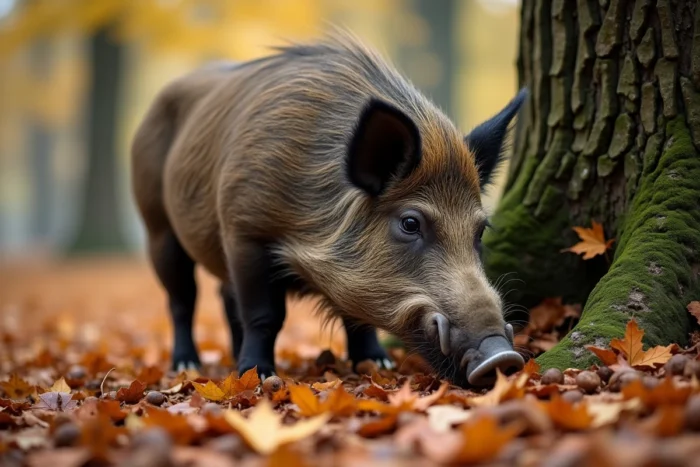
When an insect population declines in a given area, a hedgehog can compensate by increasing its consumption of fruits and mushrooms. A wild boar deprived of acorns due to poor fruiting turns to roots, worms, or agricultural crops. This dietary plasticity stabilizes certain food chains where specialists (strict carnivores or herbivores) would suffer a population collapse.
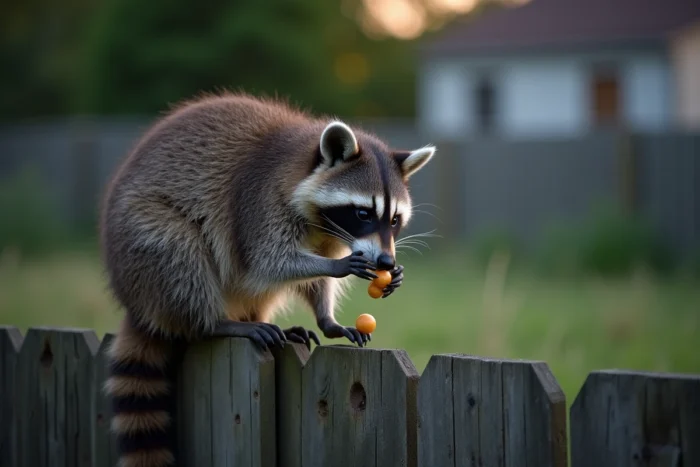
However, this same adaptability poses concrete problems in urban or peri-urban environments. The raccoon in North America, the fox in Europe, the wild boar near cities: these omnivores thrive in environments altered by human activity, sometimes to the detriment of more specialized local species. The opportunistic omnivore then becomes a factor of imbalance rather than resilience.
The available data do not allow for a definitive conclusion on the net effect of omnivory in disturbed ecosystems. Depending on geographical contexts and the species involved, field reports diverge on this point.
Little-known omnivorous species: beyond classic mammals
Common lists mention the bear, the pig, the dog, and the fox. A few less expected examples deserve attention.
Among birds, the domestic chicken (Gallus gallus domesticus) is a complete omnivore. It consumes seeds, grass, insects, small lizards, and food scraps. Corvids (crows, ravens, magpies) are among the most versatile omnivores in the avian kingdom, capable of exploiting extremely varied food sources.
In fish, several species of carp and piranhas are omnivorous. The piranha, often reduced to its image as a predator, also consumes fallen fruits in the water and aquatic plants depending on the season.
- The Florida turtle alternates between aquatic plants, small fish, and insects depending on its life stage (more carnivorous when young, more herbivorous as an adult)
- The European badger feeds on earthworms, grains, fruits, and occasionally small mammals
- Some tropical lizards combine insects and ripe fruits in varying proportions
The life stage influences the actual diet in several of these species. The Florida turtle is a good example: its need for animal proteins decreases with age, which profoundly alters the composition of its diet without changing its classification as an omnivore.
The category of omnivorous animals thus encompasses very heterogeneous physiological and behavioral realities. Classifying the brown bear, the chicken, and the piranha in the same group makes sense from a digestive perspective, much less so from the standpoint of daily feeding behavior. This tension between biological classification and field observation remains an open topic in ecology.