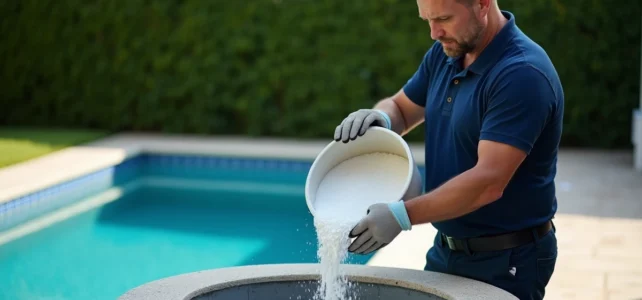
The filtering glass is a medium made of crushed recycled glass, with polished edges to prevent injury and limit the formation of clumps in the filter tank. Its smooth surface and negative charge allow it to retain particles much finer than traditional sand. Knowing when to replace it and how to proceed directly affects the quality of the water and the longevity of the entire filtration system.
Negative charge and clogging: what really wears out the filtering glass
Sand retains impurities mainly through mechanical effect, thanks to the space between the grains. Filtering glass adds a second mechanism: its surface carries a negative charge that attracts and traps colloidal particles in suspension, including those just a few microns in size.
Over time, this surface property degrades. Organic deposits, limescale, and residues from treatment products gradually cover the glass grains. The negative charge decreases, and the medium then behaves like ordinary sand, lacking the filtration fineness that justified its choice.
The clogging of glass follows a different pattern than that of sand. Sand forms compact blocks (known as “channeling”) that create preferential paths in the tank. Glass resists this phenomenon better but eventually erodes: the edges round off, the grains lose roughness, and the active surface decreases. Choosing a suitable glass for pool filtration for its tank is not enough if the replacement occurs too late.
Lifetime of filtering glass: concrete guidelines for decision-making
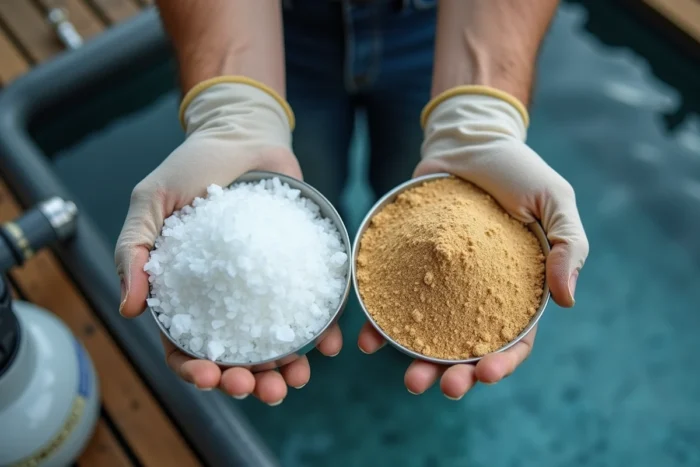
The lifetime of filtering glass exceeds that of sand, but it is not unlimited. AFM (Activated Filter Media) glass, for example, claims a significantly longer lifespan than traditional sand. In practice, several factors accelerate or slow down wear.
Factors that reduce lifespan
- Very hard water clogs the surface of the grains and neutralizes the surface charge more quickly. Regions where the TH exceeds normal thresholds require more frequent replacements.
- Undersizing of the pump or filter forces the medium to work beyond its nominal capacity, increasing pressure and fragmenting the grains.
- Too infrequent or too short backwashes allow organic matter to accumulate deep in the filter bed.
Warning signals to monitor
The filter pressure gauge remains the primary indicator. When the pressure permanently increases despite regular backwashes, the filtering medium is saturated or fragmented.
Visual appearance also matters. When opening the tank lid, functional glass presents distinct grains, without clumps or greasy deposits. If the grains stick together or emit an odor, replacement is necessary.
The water itself provides clues: a persistent haze despite proper treatment often indicates a filtering medium at the end of its life, not a chemical imbalance.
Replacing the filtering glass: step-by-step protocol
Replacing the filtering glass requires methodical steps but remains accessible without calling in a professional for a typical home installation.
Start by turning off the pump and closing the suction and discharge valves. Open the drain plug at the bottom of the tank to evacuate residual water. On some models, it is necessary to unscrew the lid or the clamp to access the filter bed.
Remove the old medium by hand or with a small shovel, protecting the strainer at the bottom of the tank. The strainers are fragile: a single impact is enough to crack a strainer, which will allow glass to pass into the discharge circuit. Take advantage of the empty tank to inspect each strainer and the central tube (the “core”).
Rinse the tank with clear water to eliminate residues stuck to the walls. Then fill the tank with water to halfway before introducing the new glass: this water cushions the fall of the grains and protects the strainers.
Quantity and grain size
The filtering glass requires about one-fifth less load compared to sand. A filter designed for a certain mass of sand will therefore accept a proportionally reduced mass of glass. Most manufacturers recommend two complementary grain sizes: a coarse grain glass at the bottom (serving as support gravel) and a fine glass above (serving as the active filtering role).
First, pour in the layer of coarse grains, then the layer of fine grains, without mixing. Replace the lid, reconnect the valves, and initiate a wash cycle followed by rinsing before resuming normal filtration.
Water savings and regulations: two recent reasons to care about replacement
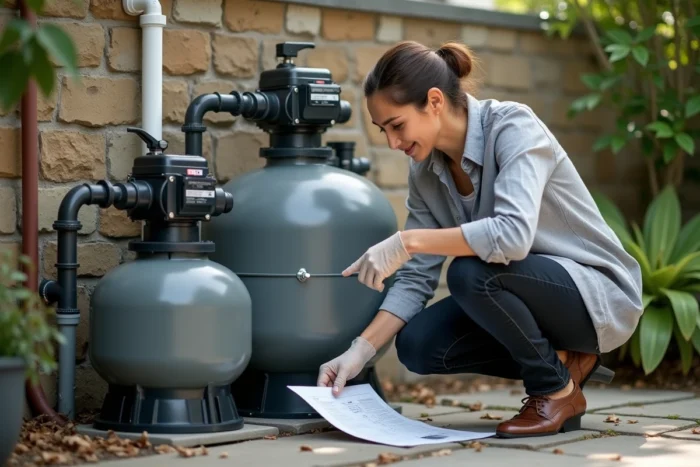
The environmental argument is increasingly influential in the choice of filtering medium. Recycled glass limits backwashes compared to sand, reducing water consumption related to filter maintenance. Some manufacturers and pool professionals highlight the possibility of performing only one monthly backwash with glass media, compared to several with sand.
For public pools, a regulatory change alters the situation. A decree published on February 20, 2026, states that starting January 1, 2027, regional health agencies will no longer directly monitor the water quality of public pools. Oversight will be entrusted to the managers themselves, who may call upon laboratories not approved by the Ministry of Health.
This increased responsibility makes the choice of filtering medium and the replacement schedule strategic. Worn glass that allows fine particles to pass will degrade the analysis results for which the manager is now solely responsible.
For a private pool, the logic remains the same on a smaller scale: a filtering medium replaced at the right time avoids overconsumption of chemicals, repeated backwashes, and corrective interventions during the peak season. Monitoring the filter pressure, visually inspecting the glass once a year, and adhering to the manufacturer’s grain sizes is sufficient to maintain effective filtration over time.