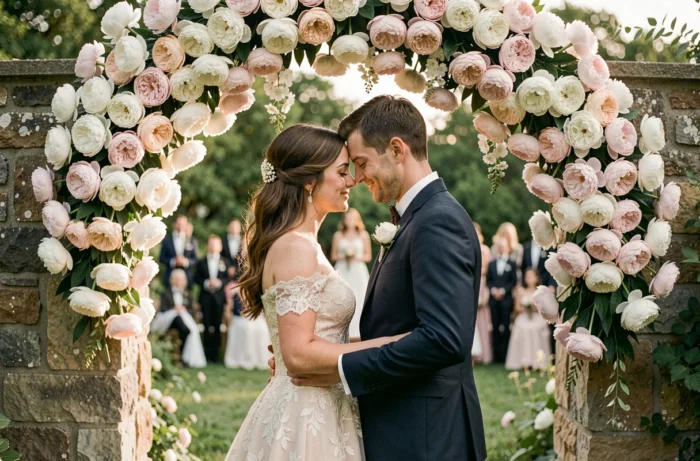
When you book a reception venue twelve months in advance and realize in May that half of the budget is already consumed by the caterer, the rest of the preparations change in nature. Organizing a memorable wedding is not about accumulating Pinterest ideas, but about making some concrete decisions at the right time. Here are the points where you can really make an impact to transform the day.
Micro-wedding and slow wedding: the format that changes the whole organization
The classic reflex is to inflate the guest list to avoid offending anyone, then look for a venue large enough, a caterer capable of serving a hundred guests, and a sound system to match. This leads to a spiral where each budget item dictates the next.
The micro-wedding (about thirty to fifty guests) turns this logic upside down. Fewer guests mean more budget per person and more room for personalization. You can choose a Michelin-starred restaurant, a vineyard, or a mountain lodge without blowing the overall budget. The venue no longer needs to be a transformed warehouse: a characterful room for forty people is enough.
The concept of a slow wedding takes this approach further. It favors short supply chains for the meal, local creators for decoration, and offers a disconnection ceremony where smartphones stay in pockets. This is not a Plan B dictated by the budget: trend guides for 2026-2027 present it as a deliberate choice, focused on the quality of interactions rather than the number of heads.
The concrete gain is also measured in stress. Fewer guests mean fewer seating plans to manage, fewer dietary restrictions to handle, and a lighter timeline of at least two or three months compared to a wedding of one hundred fifty people.
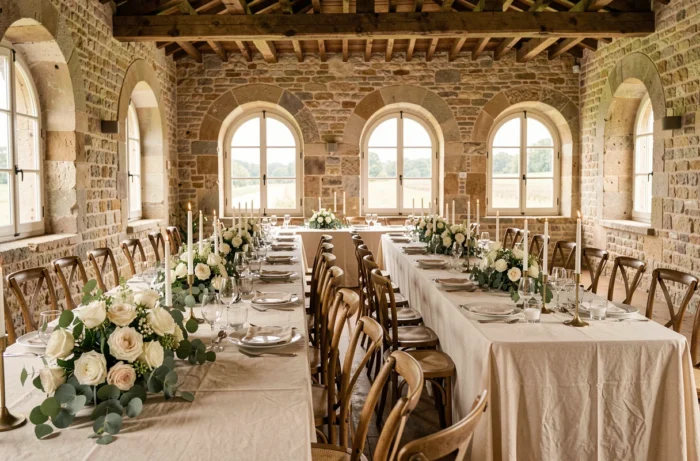
There are many inspirations for this type of reception on the website Le Monde du Mariage, which lists providers suitable for all formats.
Wedding budget: prioritize items rather than smoothing everything out
Most couples distribute their budget evenly across items. The result is an average caterer, an average photographer, and average decoration. Everything is fine, but nothing stands out.
Concentrating half the budget on a maximum of two items changes the overall perception. For example, betting big on catering and music, while reducing floral decoration to the bare minimum. Or investing in a recognized photographer-videographer and opting for a buffet instead of a seated meal.
Feedback varies on this point, but one observation often recurs: guests remember what they ate and the atmosphere of the evening. They forget the color of the napkins in less than a week. The budget allocation should reflect this hierarchy of memories.
Items where you can cut back without anyone noticing
- Stationery: a free wedding website replaces printed invitations without losing charm, especially if the design is well done
- Flowers: plant compositions with local foliage cost less than imported peonies and last better in the summer
- Favors and guest gifts: a unique local product (honey, olive oil, handmade soap) leaves a stronger impression than a generic bag
Original reception venue: what matters beyond decor
We often visit a venue projecting ourselves onto the photos. The park is beautiful, the stone is golden, the staircase is photogenic. But on the big day, logistical constraints take precedence over aesthetics.
Check kitchen access, electrical capacity, and end-of-evening hours before signing. A beautiful estate with a midnight curfew forces you to shorten the party or plan for a second location, which doubles transportation costs.
Unusual venues (old farms, repurposed warehouses, private gardens) look appealing on paper. In practice, they often require you to provide everything yourself: tables, chairs, dishes, lighting, restrooms. The “cheap venue” budget then turns into a significant equipment rental budget.
Three on-site checks before booking
- Request the layout plan with catering areas, dance floor, and cocktail space: if everything overlaps, the atmosphere will suffer
- Test the acoustics: a stone barn echoes, a tent in the rain muffles the music, a garden without walls absorbs sound
- Ensure that an indoor backup plan exists in case of bad weather, without extra charges or reduced capacity

Wedding entertainment and wedding dress: choices that leave an impression on guests
Endless entertainment (a thirty-minute slideshow, couple quiz, consecutive group games) tires more than it entertains. One or two well-calibrated activities are better than an overloaded program.
A cocktail with a live mixology station, an acoustic group during dessert, or a well-lit photobooth is enough to create shared moments. The goal is to give guests time to talk to each other, not to fill every minute.
For the wedding dress, the choice weighs heavily emotionally but also financially. Local designers often offer custom options at prices comparable to major brands, with the advantage of a perfect fit. The ideal dress is one you can dance and sit in without external help.
In terms of theme and decoration, coherence takes precedence over originality. A rustic wedding with linen tablecloths, candles, and aromatic herbs as centerpieces creates a stronger atmosphere than a “travel” theme illustrated by disparate elements stuck on every surface.
An unforgettable wedding does not depend on the quantity of ideas implemented, but on the clarity of choices. Reducing the guest list, concentrating the budget on high-impact items, checking the venue logistics before being swayed by its appearance: these early decisions free mental load and create space to enjoy the big day.